
bearing witness to myself.
My curatorial practice as life in three acts...

Act I: Journalling to witness self
I think journalling saved my life.
But first I had to overcome the fear of someone else finding and reading it.
This was such a crippling thought, that a presumption had calcified in my mind:
I wasn’t a “ diary/journal person”.
Surely not.
Not after my parents found a preteen diary I had at twelve years old for all of two weeks before its great reveal (or did I have the diary for a month? event details post-lashings are often foggy).
Not after a French therapist suggested I write and keep a journal as a way of processing complicated thoughts about my father’s death during a particularly fragile week where breathing seemed like a labour too much to ask of my mind, and my body could not hold space for life.
And certainly not after I had gotten spiritually exhausted from harsh winters, rainy days, not-so-minuscule microagressions, or being asked where I was from for what seemed like the millionth time, and why my English was “so good” for an African…..
But I did in-fact start journalling that January and kept writing everyday since. I would write about how many smiles I had encountered for the day and the joys of a warm smile.
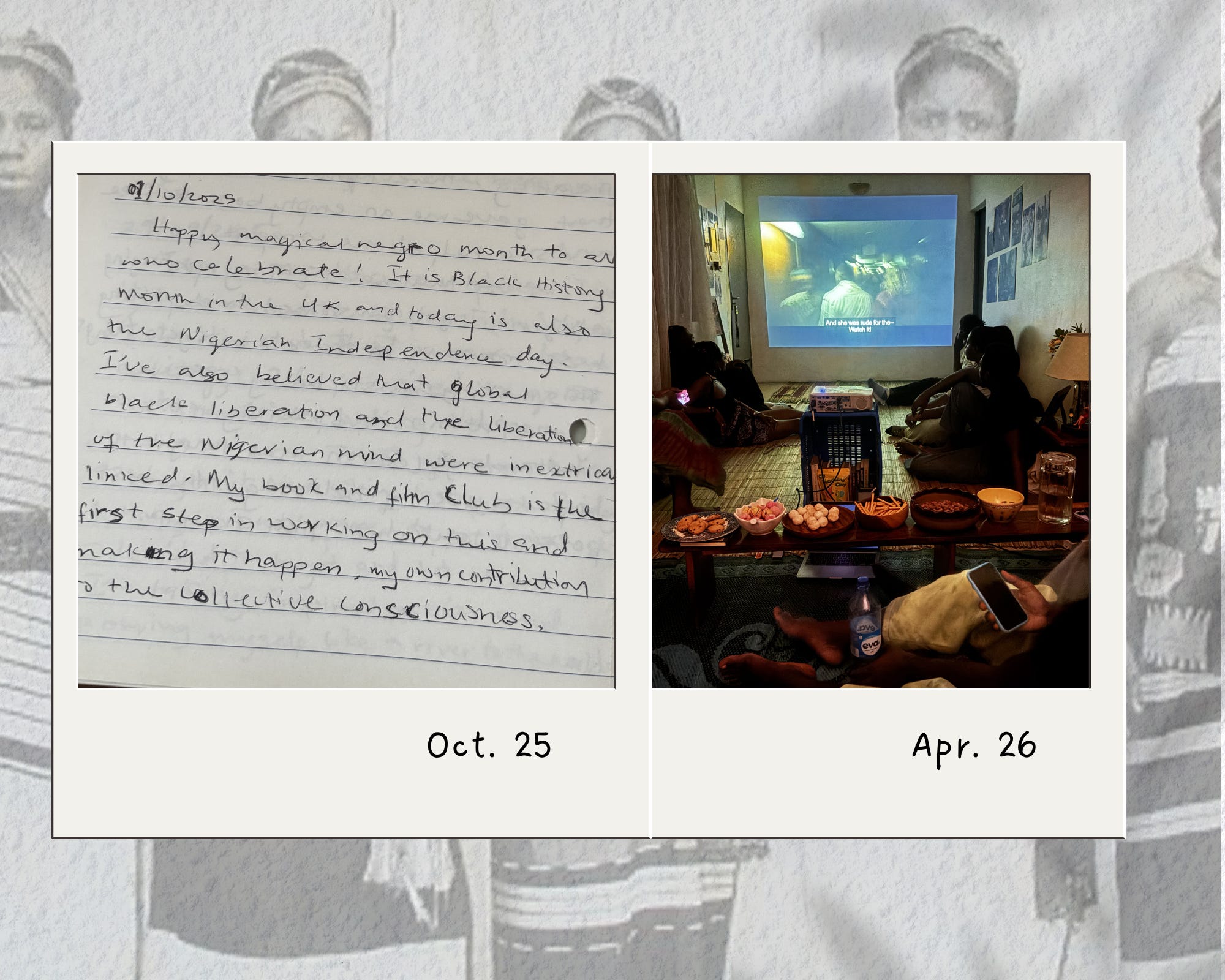
I would write about tough times but also my dreams for the future. This journal became my therapist of sorts, a self-directed intervention technique for when I had big feelings and needed to process them, my map into my tangled world of hurt, joy and a little girl inside waiting to be released through those sheets of paper on a notebook I bought at half-price from a Christmas sale.
Act II: Documenting Women
Through my personal writings and reflections I decided last year, to post more on TikTok.
I made these long-form videos about media I was consuming, using them as tools to discuss timely issues or to simply make observations about my life.
Then a follower messaged me and advised that I create a Substack as my content favoured textual long-form content and I could flesh out my ideas.
As it turns out, my videos often got bookmarked due to the density of information and video length. I took the advice and went to work.
While that writing process was aided by a lot of factors from a technical standpoint (years of academic writing and copywriting for brands), it became apparent that my journal writing had been a spiritual release needed to usher in this process and provide clarity to my mission.
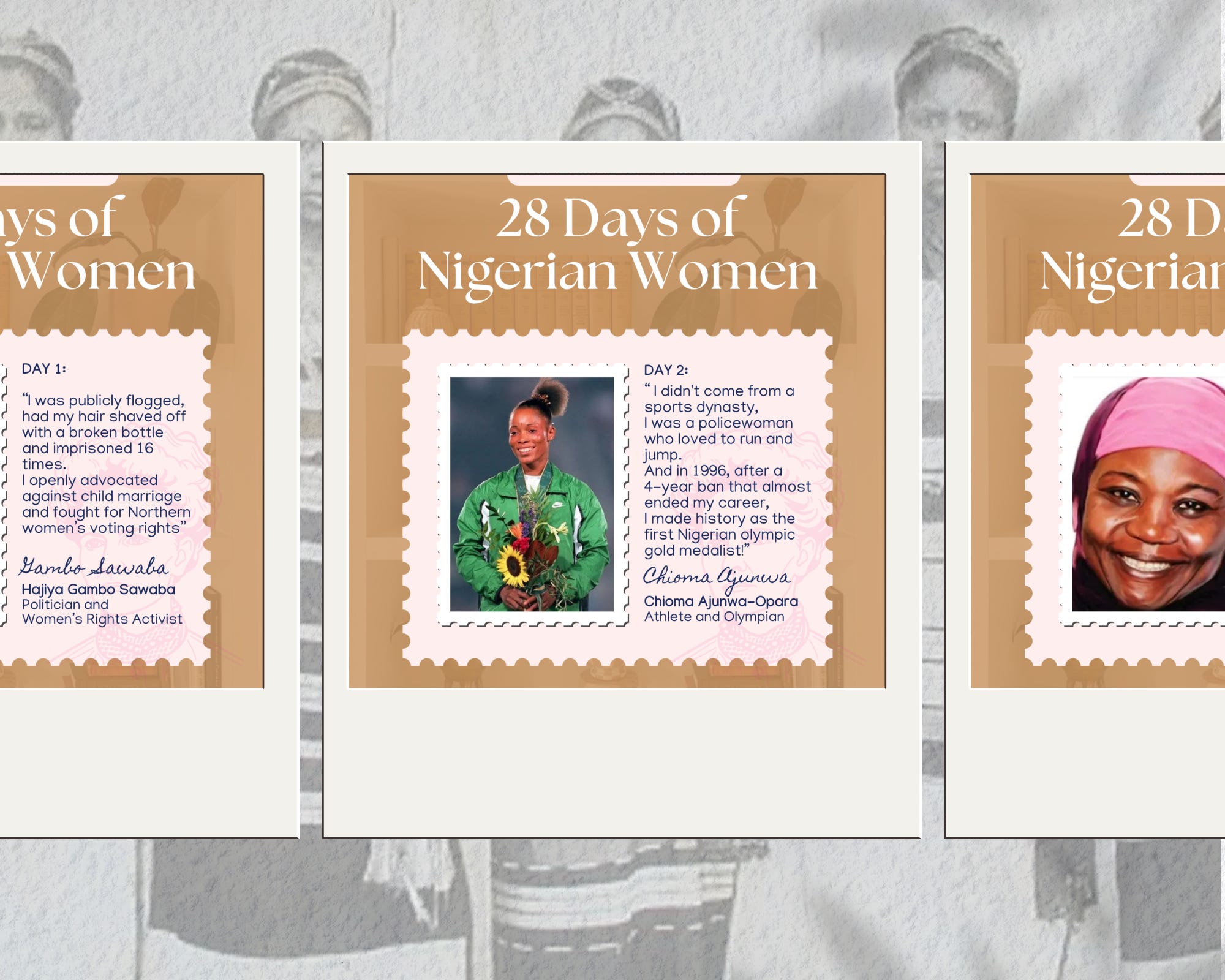
So a few days into March this year, I decided to create a social content project themed, “28 Days of Nigerian Women”. It was a series of posts about pioneering Nigerian women across sectors and history. Each post had an on-screen text written as a quote (fictionalised) from the woman being highlighted, detailing her accomplishments in conversational language. I had not felt so alive, so invigorated and so angry all at once: we as women had contributed so much to all sectors of Nigerian life and yet sidelined into domestic, politically neutral or completely inaccurate narratives in a country where the current generation of Nigerian women seemingly needed a limitless supply of courage and self-trust just to survive.
Writing in my journal was textual testimony to my resilience and storied evidence that any worries about my future was best alchemised into loving myself and experiencing life in the present. It was also a way to find patterns in the past connecting ancestral memory as a West-African woman, Nigerian woman, Yoruba woman.
The more I wrote, the more I awakened a creative bravery and soon writing felt like a homecoming: I have been worthy from the first moment I took my first breath.
I can do this (whatever “this” was). I was home.
Act III: Curation as the practice of witnessing
My experience with the curious curating workshop started before the first session. I saw an instagram post from the Didi Museum’s page about a series of Curator workshops that would be facilitated by an American curator named Robin Ruskin currently based in Ghana. It seemed like an interested proposition, this two weeks where we would converge from multiple disciplines and I proceeded to fill the form. I was shortlisted for the interview where I spoke about my writings and general thoughts on art and community, the rest is history.
What I started with no expectations, morphed into one of the best two weeks of my adult life. I was able to see how curation is an act of care: care for people, care for communities, care for ancestral technologies. There are many ways I have been transformed by this experience and will need to decompress from the emotional heaviness that I’ve carried throughout this period of transformation. For now however, we have created from our experiences, a group exhibition showing our reflections from the workshop and various works-in-process by artists, writers and curators (like myself) that participated in this event. Friends, family members and industry stakeholders were invited to our forest of possibilities which we grew and nurtured over these two weeks.
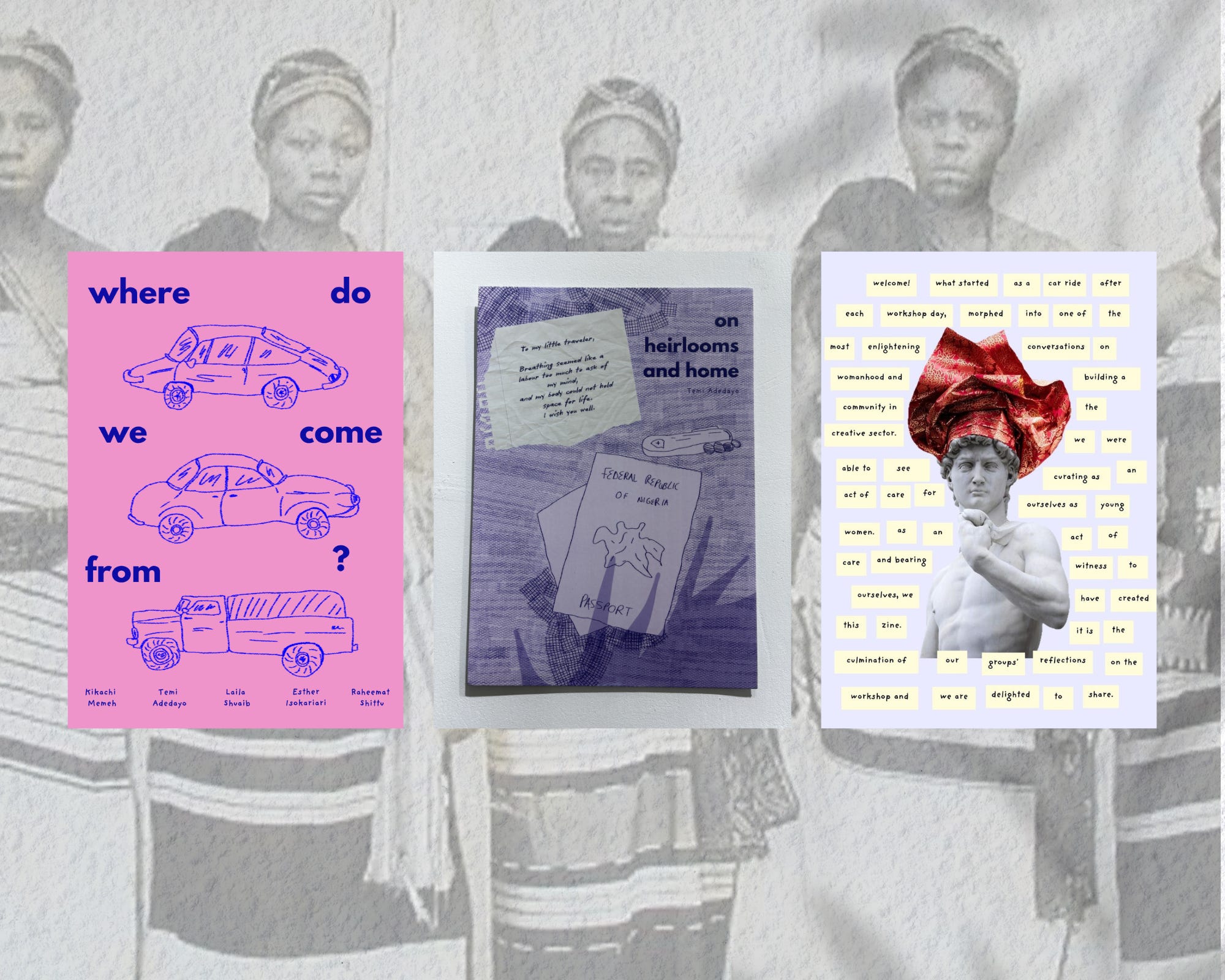
“A zine (/ziːn/ ⓘ ZEEN; short for MAGAzine or FANzine) is a magazine that is a "noncommercial often homemade or online publication usually devoted to specialized and often unconventional subject matter".” - Wikipedia
From allegorical frameworks explaining the curatorial practice, to a session on family heirlooms where I spoke about my father (for the first time in years, publicly at that), to car rides with a group of amazing women artists, writers, curators, to the idea of curating in a multimodal format which birthed a zine, we experienced (in a spiritual and psychological sense) a deep, intentional presence to our own experiences, emotions, and truths as creators.
Through the zine - an ode to girlhood, womanhood and community - we honoured our humanity by letting the workshop experience live in the pages of our creative output and shape our being.
What a sacred thing to witness.

Congratulations! What a journey!
Indeed, what a sacred thing to witness. I enjoyed reading this.