
THE DM EXCHANGE: Mariam Olubunmi Aliyu
on creating dream-like art and seeing the body as an archive

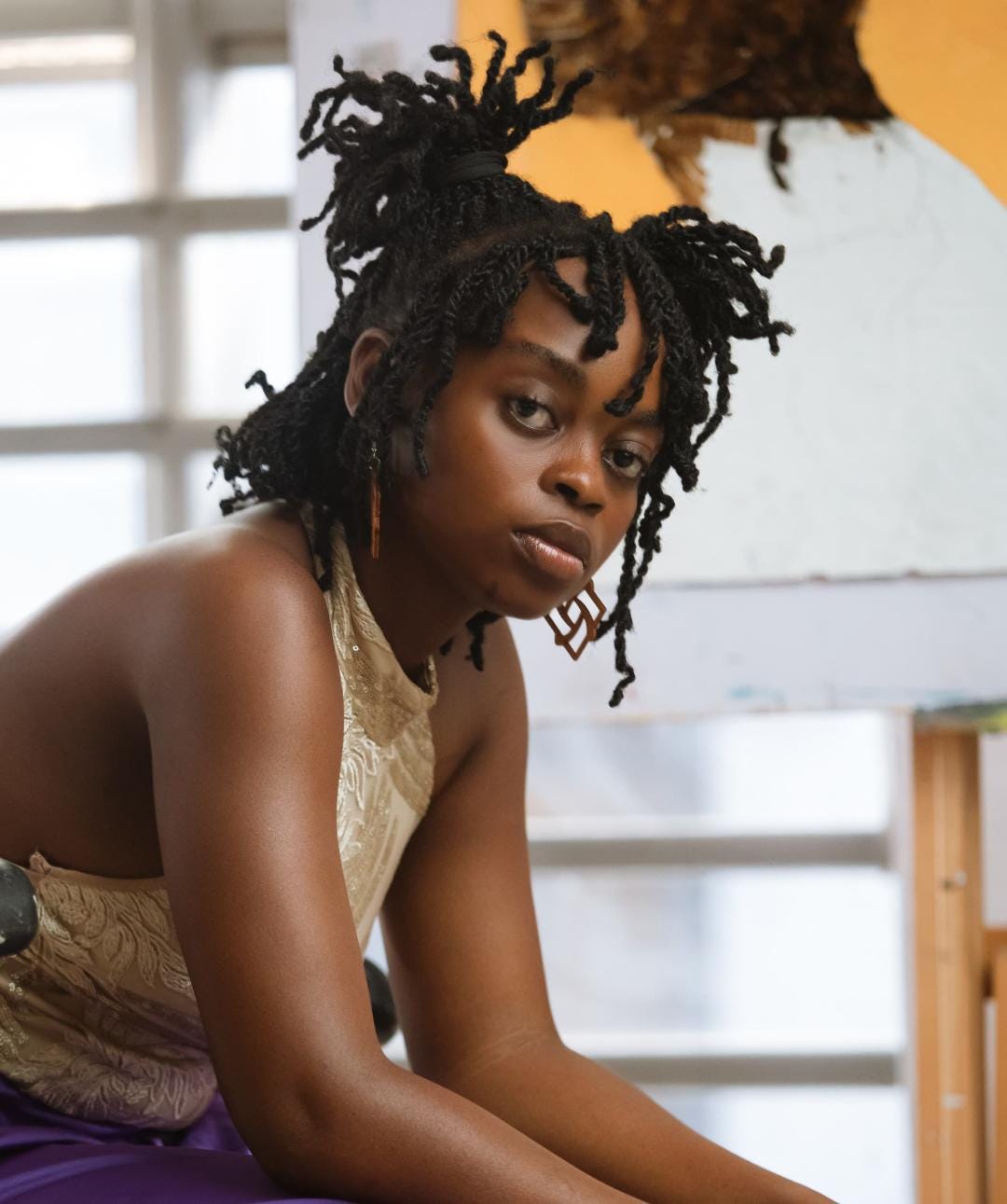
There is always a moment after an exhibition’s opening day ends.
This is when the conversations begin, the ones that don’t fit beside an artwork or into a hurried introduction. THE DM EXCHANGE is my attempt to continue those conversations via Instagram DM. In this new HPC series, I reconnect with artists, curators, writers and cultural workers after we’ve met in galleries, museums, book launches and other cultural spaces, inviting them to reflect more deeply on their practice or work.
We begin with multimedia artist Mariam Olubunmi Aliyu, whose work with pyro-collage, transforms deeply personal experiences into meditations on memory, healing and survival. What follows is our conversation, published in full.
Hi Mariam, it was lovely to connect with you again. Your current works at the “With Love From Home” Art Exhibition felt quite personal, how do you know when a private feeling is ready to become public artwork?
Mariam: Thank you, it was lovely connecting with you again as well. For me, i know a private feeling is ready to become public artwork when it has moved beyond being just a wound and has become something I can reflect on with clarity. The emotions may begin as deeply personal, but through the process of making, they transform into something that can belong to others too. I work with intention. Every material, every burn mark, every layer is carefully considered. By the time a piece leaves my studio, it is no longer just my story, it becomes an invitation for viewers to find their own memories, questions, and emotions within it. That’s when I know it’s ready to be shared.
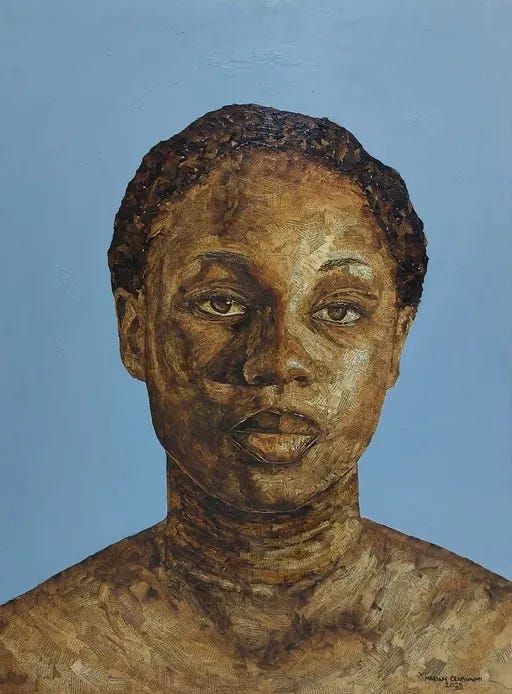
Your burnt-paper (pyro-collage) technique has become one of the visual signatures of your work. What meaning does it hold in your artist practice?
Mariam: Pyro-collage is more than a technique for me,it is the language of my practice. I intentionally use burnt paper because it carries the history of transformation. Fire is often associated with destruction, but I see it as a process that reveals, reshapes, and preserves memory in unexpected ways. The burnt edges, textures, and marks become evidence that something has been through change and still exists. Over time, this technique has become a visual signature because it embodies my belief that beauty can emerge from what appears broken and that even after transformation our stories continue to hold value.
"Fire is often associated with destruction, but I see it as a process that reveals, reshapes and preserves memory in unexpected ways."
Are the subject in your artworks people close to you (siblings, friends and yourself)? If yes, What can the people closest to us reveal that strangers never could?
Mariam: Yes, many of the subjects in my work are people close to me, my siblings, friends, and at times, myself. I’m drawn to them because familiarity carries a kind of honesty that can’t be staged. The people closest to us reveal the quiet moments that strangers rarely witness, vulnerability, resilience, unspoken emotions, shared memories and the subtle ways we care for one another. These are the moments that often shape us the most.
During the artist talk, I was really impressed by the dedication you all (Badagry Young Contemporaries) showed to being working artists in Nigeria despite all its challenges. What conversations do you think younger Nigerian artists are bringing into contemporary art?
Mariam: Thank you. I think one of the most exciting things about younger Nigerian artists is that we’re no longer waiting for permission to tell our own stories. Many of us are creating works that speak honestly about identity, memory, mental health, community, migration, gender, history, and the realities of living and working in Nigeria today. At the same time we’re experimenting with materials and processes in ways that reflect our individual experiences and cultural backgrounds. Beyond the work itself, there’s also a growing conversation about building sustainable creative careers. Young artists are finding ways to create opportunities for one another through collectives, independent exhibitions, residencies and collaborations. I think that’s what makes this moment so important. Younger Nigerian artists are not only expanding what contemporary Nigerian art can look like, we’re also redefining how it is made ,shared and sustained.
The group exhibition With Love from Home, continues at Alliance Française de Lagos and closes 1 August 2026. It brings together “the works of seven contemporary artists whose practices reflect on memory, identity, belonging, and the emotional landscapes we call home“.
The artists include: Ashele Israel • Andrew Nathan Oshobodo • Mariam Olubunmi Aliyu • Muktar Mustafa • Muyideen Olayinka • Olarenwaju Olagoke • Sejiro Mesewaku
Exhibition curated by Paul Ayihawu & Ladunni Lambo.